• Bio and legaleeze
  • Plant & Tree Inventory
  • Wildlife

permie love

~ permaculturist + master gardener

permie love

Tag Archives: gardening

love tip #8: plants with wet feet

07 Monday Apr 2014

Posted by Dusty Lynn Baker in love tips

≈ Leave a comment

Tags

benefit, flooding, gardening, hardiness zones, medicinal, perennials, puddles, rain, rooting hormone, shrubs, sustainability, trees, wet feet, Witch Hazel

So many of us panic when the rains arrive as small puddles form, then larger puddles, and then entire areas of our yard or acreage are overtaken by low-level flooding.  But is this always a bad thing?

As the rains came this past week (and yet more today) the approximately 4″ of rain in as many days has allowed me to find out where there are unexpected low areas on my property, allowing me to decide if I need to fill, line with wood chips, or just find an accommodating plant that enjoys and endures a little wet feet every now and then.

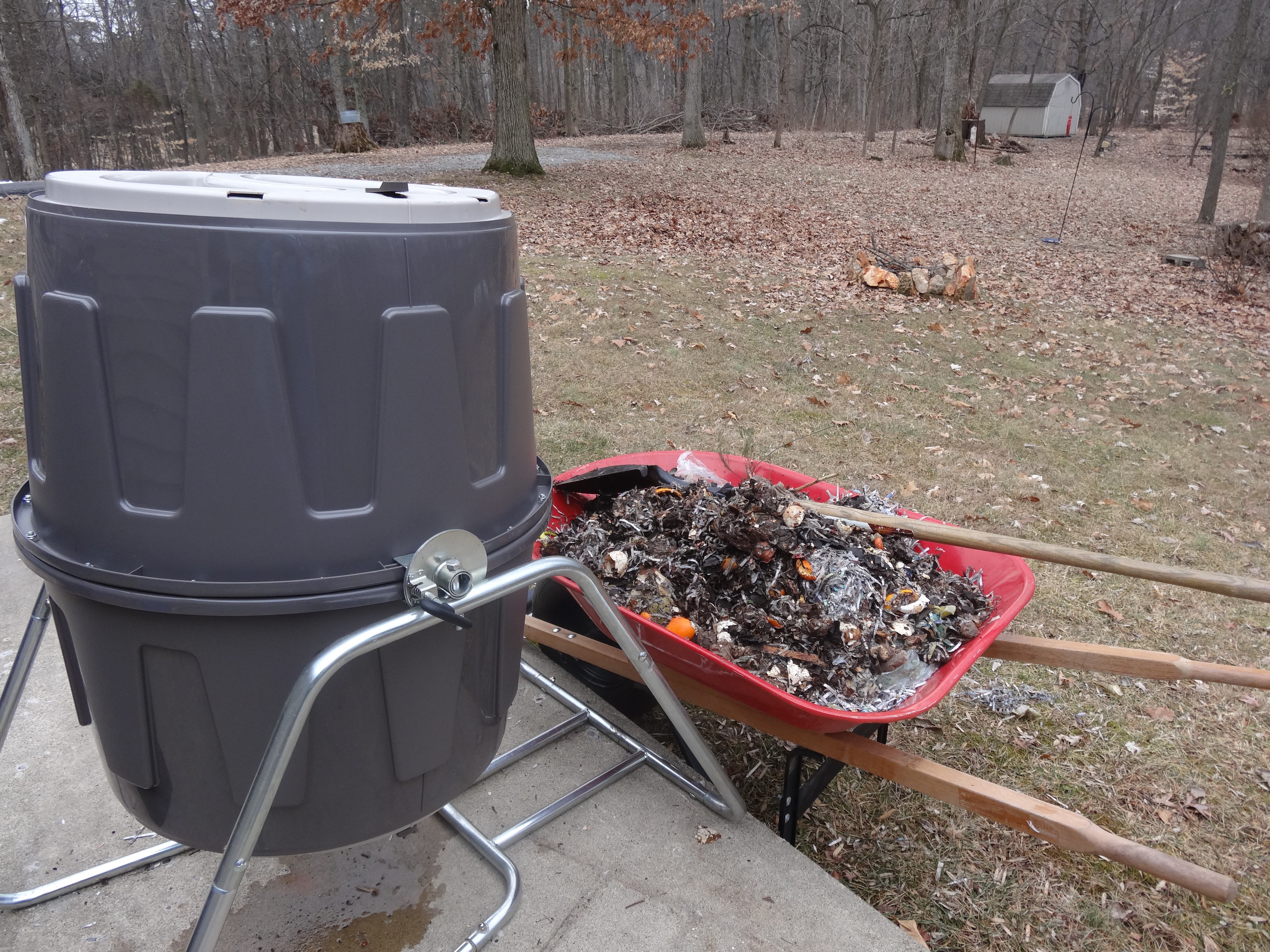
Wood chips are needed around the base of the composter.  But with a closer look, a puddle behind and to the right on the edge of the woods shows an ideal spot for a Blueberry patch.

Wood chips are needed around the base of the composter. But with a closer look, a puddle behind and to the right on the edge of the woods shows an ideal spot for a Blueberry patch.

Trees that accommodate wet feet are Willows, Red Maples, and some Magnolias and Dogwoods.  Willows must be placed carefully because they will seek out any and all water in their range, including any type of underground water or drainage/sewage lines within their reach.  Bald Cyprus will handle wet feet but if you are looking for an evergreen these will not do as they are true their name by dropping many of their needles in the late fall.  Some shrubs to consider are Blueberries, Witch Hazel, Holly and Anise.

Witch Hazel
Blueberries
Willow

When making your decisions, remember to consider sustainability and hardiness zones.  Of those mentioned, Willows are a base for making homemade rooting hormone, Witch Hazel has many medicinal values and of course Blueberries are both healthy and delicious.

this

This photo shows water settling below the driveway edge and in a lawn area between an Oak tree and the sidewalk to the house.  As this is the access area for the backyard, propane, etc., it’s not an ideal place for a planting and needs to be backfilled and reseeded so that the water will drain on the natural slope

So seek out the many additional options for your location.  And remember that perennials will not only provide you with benefits year after year, but if suited to your zone, they will not be so needing and craving your attention when gardening chores come due.
Share this:

  • Email a link to a friend (Opens in new window) Email
  • Share on X (Opens in new window) X
  • Share on Reddit (Opens in new window) Reddit
  • Share on Facebook (Opens in new window) Facebook
  • Share on Pinterest (Opens in new window) Pinterest
  • Print (Opens in new window) Print
  • More
  • Share on LinkedIn (Opens in new window) LinkedIn
Like Loading...

rain barrels are filling

27 Thursday Mar 2014

Posted by Dusty Lynn Baker in Uncategorized

≈ 1 Comment

Tags

cistern, clay soil, downspout, gardening, Mother Earth, perennials, plants, rain barrel, savings, sustainabilty, thunderstorms

UPDATE!  These rain barrels were a wonderful addition last year!  We had good rainfall and both remained nearly full the entire summer.  I did not use the garden hose, NOT ONE TIME, for watering!  When winter came, I had to open the valves so that the water would pass through and not freeze the faucets on them.  Need to figure out a way to ‘bypass the bypass’ so that the water will drain back down the original path and away from the house.

Thunderstorms coming in tonight to both test and help fill our new rain barrels!

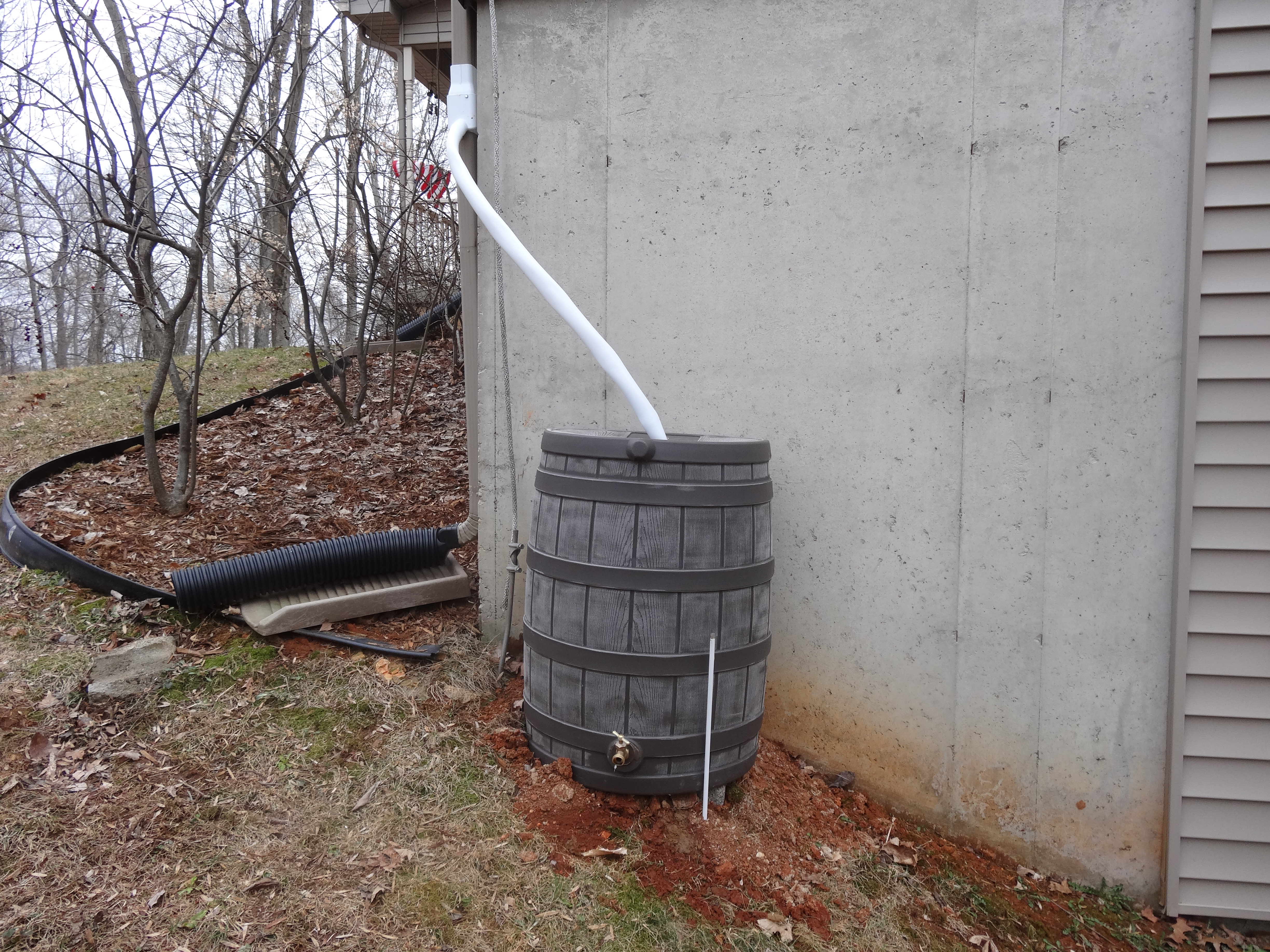
Got two 50-gallon rain barrels installed on the downspouts.  Not anywhere near the amount I’ll want or need but it is a start.

50 Gallon Rain barrel

Hoping to eventually get a large cistern for this end of the house where the basement walk-out area is and then placing the smaller ones on the other end by our driveway.

And while it will take over 300 fillings of each to start saving dollars out of my pocket due to sunk costs on the barrel and downspout redirect, the savings to Mother Earth are enormous.

Every time a barrel fills, that’s 50 gallons less of pumped and chemical filled water being delivered to my door.  Also, by getting the pre-made enclosed barrels, we won’t be adding to the summer mosquito problems.

Note to self: Re-level them after a few rains (very clay soil) and then plant some perennials around the bases to help seat them in and to beautify!


Share this:

  • Email a link to a friend (Opens in new window) Email
  • Share on X (Opens in new window) X
  • Share on Reddit (Opens in new window) Reddit
  • Share on Facebook (Opens in new window) Facebook
  • Share on Pinterest (Opens in new window) Pinterest
  • Print (Opens in new window) Print
  • More
  • Share on LinkedIn (Opens in new window) LinkedIn
Like Loading...

greenhouse boxes are cooking

24 Monday Mar 2014

Posted by Dusty Lynn Baker in Uncategorized

≈ Leave a comment

Tags

boxes, bricks, fire pit, gardening, grass, greenhouse, limestone, parachute cord, perennials, seeds, sunroom, tiller, weeds, wood chips

Got two 3′ x 3′ greenhouse boxes set up just outside of the sunroom door.  I purchased these and am concerned that they’re a bit lightweight so I’ve staked them down (inside) and, I’ve placed bricks with parachute cord over the lids to hopefully keep the wind from taking them until I find a better strapping option for the lids.  (Suggestions greatly appreciated!)  I have a feeling, that later this year or next spring I’ll be building more permanent ones with wood and recycled windows.

Greenhouse boxes

Before placing the boxes, I tilled the ground under them and in the walkway between.  I then placed newspaper over the soil inside of the greenhouses to block the sunlight and kill the existing grass and any weed seeds that I stirred up with the tiller.  The walkway is lined with newspaper also and then topped with wood chips from our property.  With newspaper and chips in place, I then soaked the area in and around the boxes to settle the soil and pack down the chips and paper.

Since this is the beginning of a pathway to our fire pit, I plan to continue the wood chips in a T-shape around the boxes so that I won’t have to worry about mud when working on the sides opposite the sidewalk.  I’ll then add perennials along the future pathway and line the edges with limestone rocks gathered from our property.


Share this:

  • Email a link to a friend (Opens in new window) Email
  • Share on X (Opens in new window) X
  • Share on Reddit (Opens in new window) Reddit
  • Share on Facebook (Opens in new window) Facebook
  • Share on Pinterest (Opens in new window) Pinterest
  • Print (Opens in new window) Print
  • More
  • Share on LinkedIn (Opens in new window) LinkedIn
Like Loading...

delving into hugelkultur

10 Monday Mar 2014

Posted by Dusty Lynn Baker in Uncategorized

≈ 1 Comment

Tags

compost, easy steps, garbage, gardening, hugelkultur, kitchen compost, manure, Mother Nature, permaculture, plantable, recycle, shredded newspaper, soil, spring, zero waste

***Update July 2014!  The ugly box to this beautiful hugelkultur planter!  The soil has sunken about 18″.  I plan to add my summer compost, a layer of soil and then top with straw for the winter.  I also have to reinforce the sides.  I get about five huge cucumbers a week from these 3 plants and there really are strawberry plants in there also (peeking out the slats.)  I trim the leaves about once a week but the growth is insane.  ALL ORGANIC, NO PESTICIDES OF ANY KIND, not even ‘organically approved’ pest repellants.  There are red ants that I have to fight with on one corner and a few chewed leaves, but nothing that has affected production.

one of the many cucumbers
Cucumbers with strawberries

Original post:

The minute I read about hugelkultur gardening, I knew that I had the perfect location ready and waiting to be developed.

When we moved to our home last year we decided to get as close to zero waste as possible.  The first step was finding out the recycling rules for our county and not setting up regular garbage pickup, thus forcing us to get back into the strong habit of analyzing every bit of product packaging coming into our home.

'recycled' garbage bin with the first hugelkultur layers

‘recycled’ garbage can bin with the first hugelkultur layers

For us, this meant that the ready-built garbage can bin no longer had a job.  We took the plastic trash cans and placed them in our sunroom with liners to collect plastic and cardboard recycling, leaving the outside bin empty and a bit of an eyesore.

But, being ever the gardener, I hoped to find a way grow vines around it without it collapsing in, and although most often in an open mound, the hugelkultur became the perfect solution.  And with spring looming, I had to get on the job so that the mound will have the requisite two months to settle before planting.

6 easy steps

step 1, a layer of logs and branches topped with leaf layer

step 1, a layer of logs and fallen branches topped with leaves

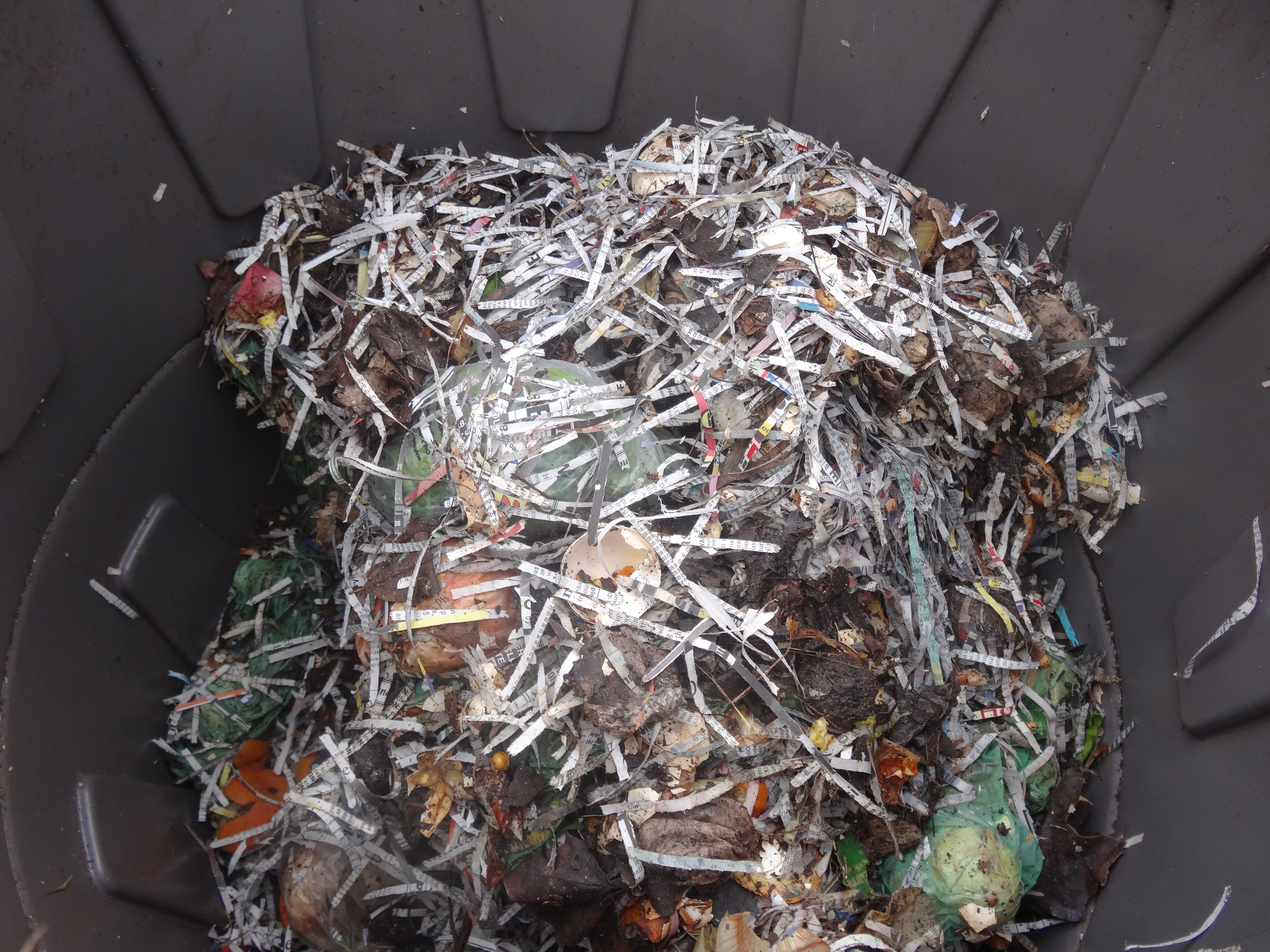
step 2, shredded newspaper added to rough compost

step 2, shredded newspaper added to rough compost (an easy way to double compost)

step 3, bin to barrow

step 3, bin to barrow

step 4, adding the compost layer with an extra layer of flat newspaper to disparage the racoons

step 4, compost layer with an extra layer of flat newspaper to disparage the raccoons

step 5, final leaf layer

step 5, final leaf layer

step 6, adding a soil layer

step 6, adding a soil layer (straw can be added to help hold the soil on open mounds)

While the steps can vary, I chose to use my winter kitchen scraps as compost and leaves from last fall that had already begun breaking down.  Another option is manure with–or instead of–compost or soil, whatever is readily available to you.

The key is to place larger items like logs on the bottom with smaller, plantable soil on top and after relatively little work, you are composting without the need to flip and turn and worry about temperatures.  Mother Nature will do all the work for you, and you get to grow crops during the process!

Promises to update with pictures at planting time!  Maybe clematis and strawberries?

Now, where am I going to put the asparagus …

Share this:

  • Email a link to a friend (Opens in new window) Email
  • Share on X (Opens in new window) X
  • Share on Reddit (Opens in new window) Reddit
  • Share on Facebook (Opens in new window) Facebook
  • Share on Pinterest (Opens in new window) Pinterest
  • Print (Opens in new window) Print
  • More
  • Share on LinkedIn (Opens in new window) LinkedIn
Like Loading...

love tip #5: organic vs. heirloom

24 Monday Feb 2014

Posted by Dusty Lynn Baker in love tips

≈ 4 Comments

Tags

bone meal, cross-pollination, cultured, flowers, gardening, GMO, heirloom, herbs, hybrid, insecticides, natural, organic, Organic Seed People, vegetables

Do you know the difference?  Luckily I do, and last week a day of shopping with my son became a lesson on the true difference between organic and heirloom seeds and plants.

Gourmet Carrot Blend, Photo credit: Organic Seed People

Gourmet Carrot Blend, Photo credit: Organic Seed People

The first difference is in the age and development of the seeds.  Heirloom seeds typically have been passed down 50+ years and are from non-hybrid/GMO plants.  These plant types have grown and developed through natural pollination but may or may not have been grown organically.

Organic seeds have been cultured from either heirloom or hybrid plants.  The plant must have been grown chemical-free using natural compost and insecticides with soap-based sprays and bone meal allowed.

So can you grow heirloom and organic seeds in the same garden?  Yes, BUT, while the heirloom seeds will produce heirloom plants on first run, the resulting plants might be blended with the organic plants and will only remain ‘heirloom’ if both were originally.  AND, the organic seeds will only produce ‘organic’ plants if they are grown and nurtured organically to maturity.

How to make sure your heirlooms remain heirloom?  You need a buffer zone, basically acreage, between you and your neighbors farms and gardens to keep cross-pollination with non-heirloom plants from occurring.  This is a difficult process and the outcome from year to year can be unpredictable.

So look for organic heirloom seeds and if needed, purchases new seeds annually to ensure you are truly getting the best for your family.

Although many heirloom seed producers are not organic, and vise versa, growers such as Organic Seed People offers organic heirloom seeds.  (When visiting their site, be sure to scroll down to the link for ‘Organic Heirloom Seeds.”  The link will bring up three choices: Vegetables, Flowers and Herbs with multiple choices under each.  You must make sure that you don’t get into the wrong area by side-links or you might mistakenly purchase seeds that are not both organic and heirloom.)

* Please note, I do NOT receive compensation for links.  I am merely helping the process in finding viable sources and cannot guarantee products!

Share this:

  • Email a link to a friend (Opens in new window) Email
  • Share on X (Opens in new window) X
  • Share on Reddit (Opens in new window) Reddit
  • Share on Facebook (Opens in new window) Facebook
  • Share on Pinterest (Opens in new window) Pinterest
  • Print (Opens in new window) Print
  • More
  • Share on LinkedIn (Opens in new window) LinkedIn
Like Loading...
Newer posts →
Follow permie love on WordPress.com

Enter your email address to follow this blog and receive notifications of new posts by email.

Join 40 other subscribers

Instagram

No Instagram images were found.

Recent Posts

  • land ho!
  • Ohio River Valley
  • living on a permaculture farm in Hawai’i
  • and miles to go before I sleep
  • transitions coming my way

Tags

blog Buddha compost edible education flowers forest garden garden gardening garden tour Good Earth Master Gardeners grass greenhouse hugelkultur identification Indiana insecticides knowledge love tip master gardener medicinal Mother Earth Mother Nature natural Ohio River Valley organic perennials permaculture permie love photos plants presentation Purdue Master Gardener Purdue University rain barrel seed seeds snow spring summer sustainability sustainable training travel trees vegetables Washington County weeds woods Zen

Categories

  • blog
  • education
  • Environmental relations
  • in the gardens
  • love tips
  • travel
  • Uncategorized

Create a free website or blog at WordPress.com.

Privacy & Cookies: This site uses cookies. By continuing to use this website, you agree to their use.
To find out more, including how to control cookies, see here: Cookie Policy
  • Subscribe Subscribed
    • permie love
    • Join 40 other subscribers
    • Already have a WordPress.com account? Log in now.
    • permie love
    • Subscribe Subscribed
    • Sign up
    • Log in
    • Report this content
    • View site in Reader
    • Manage subscriptions
    • Collapse this bar
 

Loading Comments...
 

    %d